The Future of AgTech: Scaling with IoT
How connected sensors, smart equipment, edge computing, AI, and real-time farm data are transforming agriculture from isolated operations into intelligent, connected ecosystems.


Article Contents
- •Agriculture Is Becoming a Connected Industry
- •Why Scaling AgTech Is Harder Than Building It
- •What IoT Really Changes on the Farm
- •The Connected Farm Architecture
- •From Sensors to Decisions
- •Smarter Soil and Crop Monitoring
- •Intelligent Irrigation at Scale
- •Connected Equipment and Precision Operations
- •Livestock and Environmental Monitoring
- •Edge Computing: Bringing Intelligence Closer to the Field
- •IoT + AI: From Data Collection to Prediction
- •Connecting the Farm to the Supply Chain
- •The Economics of Scaling IoT
- •Challenges to Large-Scale AgTech Adoption
- •A Practical Roadmap for Scaling IoT
- •What the Future Connected Farm Could Look Like
- •Making the Call
- •Final Takeaway
How connected sensors, smart equipment, edge computing, AI, and real-time farm data are transforming agriculture from isolated operations into intelligent, connected ecosystems.
Agriculture Is Becoming a Connected Industry
For generations, farming depended on something remarkably simple:
Observation.
Farmers looked at the soil.
They watched the weather.
They inspected crops.
They listened to equipment.
They learned from previous seasons.
That knowledge remains incredibly valuable.
But modern agriculture is adding another layer:
Continuous data.
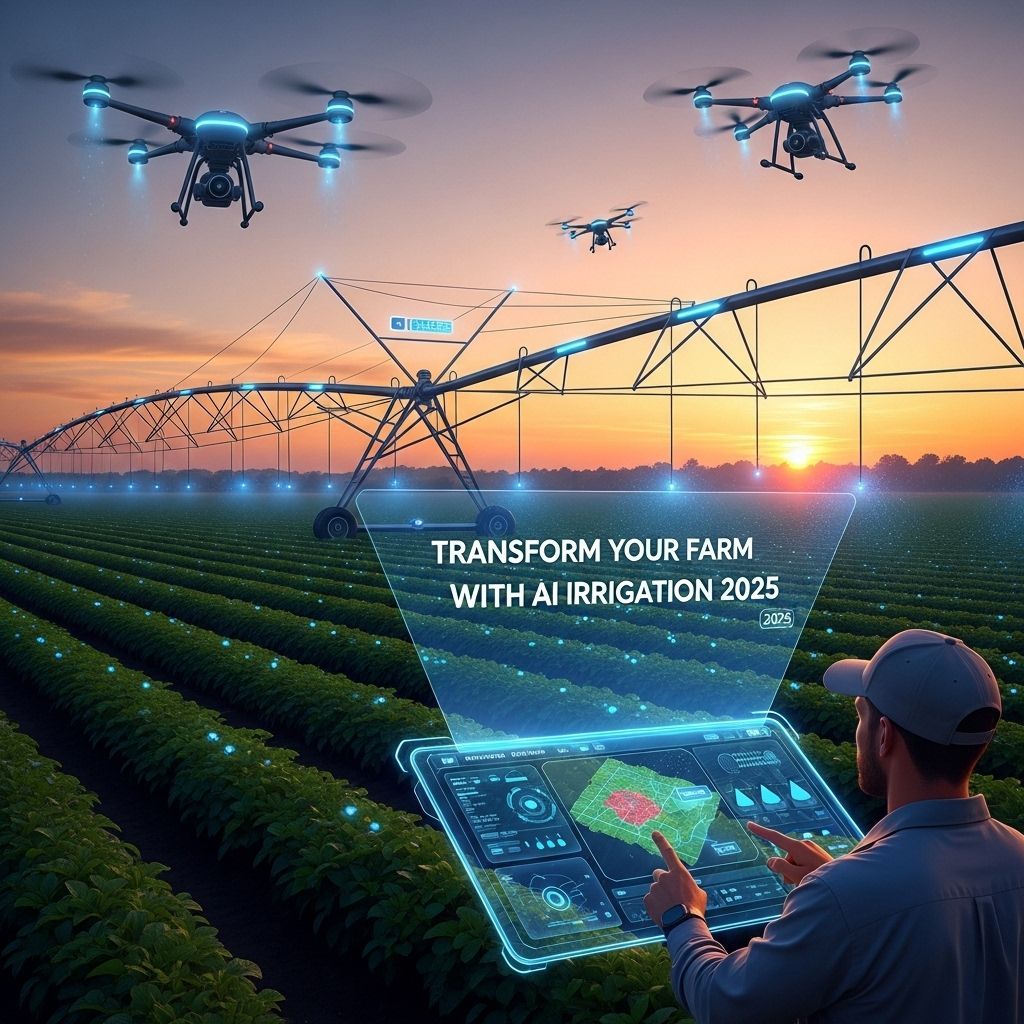
A sensor can monitor soil moisture without waiting for someone to walk into the field.
A weather station can continuously measure environmental conditions.
A connected irrigation system can respond to changing field conditions.
A tractor can generate operational data throughout the day.
A drone can capture detailed crop imagery.
And an AI system can analyze thousands of these signals far faster than a person could.
This is the promise of the Internet of Things, or IoT, in agriculture.
IoT is not simply about putting sensors on farms.
It is about creating a connected system in which:
Physical conditions become digital signals, digital signals become insights, and insights become actions.
That shift could fundamentally change how agricultural operations scale.
Why Scaling AgTech Is Harder Than Building It
Building a smart-farming prototype is relatively easy.
Deploying ten sensors on one field is manageable.
The real challenge begins when an agricultural business wants to deploy:
10 sensors → 1,000 sensors → 100,000 sensors
across different fields, regions, crops, machines, and operating conditions.
Suddenly, the questions become much harder.
How will all the devices connect?
How will they be powered?
How will data be transmitted from remote fields?
How will devices be updated?
How will faulty sensors be detected?
How will millions of readings be stored?
How will farmers actually use the information?
And perhaps the most important question:
Does the additional data create enough value to justify the additional complexity?
This is where scalable AgTech needs to move beyond individual devices.
The future is not:
More Sensors.
It is:
More Useful Intelligence Per Sensor.
What IoT Really Changes on the Farm
Traditional agricultural monitoring is often periodic.
Someone checks a field.
A sample is collected.
A machine is inspected.
A report is generated.
IoT changes the frequency.
Instead of asking:
"What was the soil moisture when we checked it?"
a connected farm can ask:
"How has soil moisture changed over the last six hours, and what is likely to happen over the next twelve?"
That difference matters.
IoT enables continuous visibility into conditions such as:
- Soil moisture
- Soil temperature
- Air temperature
- Humidity
- Rainfall
- Water levels
- Crop conditions
- Equipment status
- Energy consumption
- Irrigation activity
- Livestock conditions
The result is a transition from periodic observation to continuous monitoring.
And continuous monitoring creates the data foundation needed for automation and predictive analytics.
The Connected Farm Architecture
A scalable IoT system usually consists of several layers.
Field (Sensors, Machines, Cameras) → Edge / Gateway → Connectivity Layer → Data Platform (AI/ML, Analytics, Alerts) → Farm Management → Human / Machine Action
Each layer has a different job.
Sensors
Capture what is happening physically.
Edge Devices and Gateways
Collect, filter, and sometimes process data near the source.
Connectivity
Moves information between the field and the platform.
Data Platform
Stores and organizes information from many devices.
AI and Analytics
Turn raw measurements into insights and predictions.
Farm Management Systems
Turn insights into operational decisions.
Automation
Allows machines or systems to act without requiring every decision to be made manually.
The power comes from connecting these layers.
From Sensors to Decisions
A temperature sensor producing a number is not intelligence.
Neither is a soil-moisture graph.
The value appears when data changes a decision.
Consider this workflow:
Sensor detects declining soil moisture ↓ System checks crop growth stage ↓ Weather forecast shows low rainfall probability ↓ AI estimates increasing crop-stress risk ↓ Irrigation recommendation is generated ↓ Farmer approves or automated irrigation begins ↓ System measures the result
That creates a feedback loop:
Sense → Understand → Predict → Act → Measure → Learn
This is the real purpose of agricultural IoT.
Not collecting data.
Creating better decisions.
Smarter Soil and Crop Monitoring
Soil is one of the most important sources of information in agriculture.
Yet a field is rarely uniform.
One section may have adequate moisture.
Another may be dry.
One area may have different nutrient conditions.
Another may drain more slowly.
IoT allows farmers to capture these differences at much greater resolution.
Connected sensors can provide information about:
- Soil moisture
- Soil temperature
- Electrical conductivity
- Environmental conditions
- Water availability
When combined with satellite imagery, drones, weather information, and historical farm data, these measurements become much more powerful.
A modern system can move toward:
"What is the condition of this field?"
instead of simply:
"What is the average condition of the farm?"
That enables more precise management.
The objective is not to treat every square meter identically.
It is to understand where conditions differ and respond accordingly.
Intelligent Irrigation at Scale
Water is one of the clearest examples of why IoT matters.
Traditional irrigation schedules can be based on fixed timing.
For example:
Water every two days.
But fields do not always behave according to the calendar.
Weather changes.
Soil moisture changes.
Crop growth changes.
Evapotranspiration changes.
IoT can provide the real-time information required to make irrigation more responsive.
A connected irrigation workflow could look like:
Soil Sensors → Moisture Data → Weather Information → Crop Growth Stage → AI Analysis → Irrigation Recommendation → Valve / Pump Control → Outcome Measurement
At small scale, this can help one field.
At large scale, the challenge becomes orchestration.
Imagine thousands of irrigation zones.
Each zone may have different moisture conditions and crop requirements.
A scalable platform can prioritize where water is most needed rather than applying the same schedule everywhere.
This is where IoT moves from monitoring to resource optimization.
Connected Equipment and Precision Operations
Agricultural machinery is becoming another major source of IoT data.
Modern equipment can generate information about:
- Location
- Fuel consumption
- Engine conditions
- Operating hours
- Speed
- Field coverage
- Seeding activity
- Spraying activity
- Harvest operations
- Maintenance conditions
This creates a digital view of machine activity.
For example, equipment data can help answer:
Which machines are operating?
Where are they working?
How much area has been completed?
Which machines require maintenance?
Where is fuel being consumed?
Are operations progressing according to schedule?
That information can improve coordination.
It can also enable predictive maintenance.
Instead of waiting for a machine to fail, a connected system can identify unusual operating patterns and flag potential problems earlier.
The objective is simple:
Fix the problem before downtime becomes expensive.
Livestock and Environmental Monitoring
IoT is not limited to crops.
Connected technology can also support livestock operations.
Sensors can monitor environmental conditions and animal-related signals such as:
- Temperature
- Humidity
- Movement
- Location
- Feeding behavior
- Water consumption
- Activity patterns
The purpose is not to turn farming into a surveillance system.
The purpose is to identify meaningful changes earlier.
For example, an unusual change in activity could trigger a closer inspection.
Environmental sensors can also help maintain better conditions in barns, greenhouses, and controlled agricultural environments.
This creates another useful principle:
Continuous monitoring does not replace human observation. It tells humans where to look first.
Edge Computing: Bringing Intelligence Closer to the Field
Agricultural environments are not always connected to fast, reliable networks.
Fields can be remote.
Connectivity can be intermittent.
Sending every sensor reading to the cloud may also be inefficient.
This is where edge computing becomes important.
Instead of sending everything immediately to a remote server, an edge device can process some information locally.
For example:
Sensor → Edge Device → Local Analysis → Immediate Alert / Action → Cloud Synchronization
Imagine a greenhouse where temperature rises rapidly.
The system does not necessarily need to wait for a cloud service to decide whether ventilation should start.
The local edge device can respond immediately.
The cloud can still receive the data for long-term analytics.
This creates a hybrid model:
Edge for speed.
Cloud for scale.
AI for intelligence.
That combination is likely to become increasingly important as agricultural IoT deployments grow.
IoT + AI: From Data Collection to Prediction
IoT provides the data.
AI helps understand it.
Together, they can create something much more powerful than either technology alone.
Consider crop monitoring.
IoT sensors detect changing environmental conditions.
Satellite imagery shows vegetation changes.
Weather data provides future conditions.
Historical records provide context.
Machine-learning models combine these signals.
The result could be a prediction such as:
"This field has an elevated probability of water stress during the next five days."
That is much more useful than:
"Soil moisture is 21%."
The first statement supports a decision.
The second is simply a measurement.
This distinction is critical for the future of AgTech.
The industry is moving from:
Data Collection
toward:
Contextual Intelligence
and eventually:
Predictive Action.
Connecting the Farm to the Supply Chain
The value of IoT does not stop at the farm boundary.
Connected agriculture can create visibility across the broader food system.
Consider the journey:
Farm → Production → Harvest → Storage → Processing → Transportation → Market → Consumer
IoT can contribute information at many stages.
Crop sensors can improve production forecasts.
Equipment data can improve harvest planning.
Storage sensors can monitor environmental conditions.
Logistics systems can provide shipment visibility.
Market systems can provide demand signals.
When these data sources are connected, agricultural businesses can build a much clearer picture of the entire operation.
For example:
Expected Yield ↓
→ Harvest volume changes → Storage requirements change → Transportation plans change → Market supply forecast changes
A field-level signal can therefore influence decisions far beyond the field.
This is where scalable IoT becomes strategically important.
The Economics of Scaling IoT
A successful IoT deployment cannot be measured by the number of connected devices.
A farm with 50,000 sensors is not automatically smarter than a farm with 500.
The important question is:
What measurable value does each connected system create?
Potential benefits can include:
- Reduced water consumption
- Lower input costs
- Reduced equipment downtime
- Better yield forecasting
- Lower crop losses
- Improved labor utilization
- Better harvest planning
- Reduced waste
- More consistent crop conditions
But IoT also creates costs.
There is the cost of:
- Hardware
- Installation
- Connectivity
- Power
- Maintenance
- Data storage
- Software
- Security
- Device management
- Staff training
This means AgTech companies need to think carefully about the economics of scale.
The winning systems will not necessarily be the ones with the most sophisticated sensors.
They will be the ones that produce clear operational value at sustainable cost.
Challenges to Large-Scale AgTech Adoption
Scaling IoT across agriculture introduces several difficult challenges.
Connectivity
Remote agricultural areas may not have reliable connectivity.
Systems need to support multiple communication methods and tolerate intermittent connections.
Power
Sensors in remote fields cannot always depend on continuous electrical power.
Battery life and low-power hardware become critical.
Device Management
Managing ten devices is easy.
Managing 100,000 is an entirely different problem.
Organizations need centralized monitoring, configuration, firmware updates, and fault detection.
Data Overload
More sensors produce more information.
Without good filtering and analytics, teams can become overwhelmed by alerts and dashboards.
Interoperability
Agricultural equipment and software often come from different vendors.
Systems need ways to exchange information reliably.
Security
Every connected device creates another potential entry point into the technology environment.
Authentication, encryption, secure updates, and device management therefore become increasingly important.
Farmer Experience
A technically impressive system can still fail if it is difficult to use.
The interface must answer practical questions quickly.
Farmers should not need to become IoT engineers to understand their farm.
A Practical Roadmap for Scaling IoT
The best way to scale agricultural IoT is not to connect everything immediately.
Start with a problem.
Step 1: Identify One High-Value Use Case
Examples include:
- Irrigation optimization
- Equipment monitoring
- Crop-health monitoring
- Greenhouse automation
- Livestock monitoring
- Predictive maintenance
Choose something measurable.
Step 2: Define the Business Metric
For irrigation:
Water used per hectare
For equipment:
Unplanned downtime
For crop monitoring:
Early detection rate
For yield forecasting:
Forecast accuracy
Without a measurable outcome, it becomes difficult to determine whether the IoT deployment is actually working.
Step 3: Start With a Pilot
Deploy across:
- One field
- One greenhouse
- One crop
- One equipment fleet
- Or one production region
Learn what works before expanding.
Step 4: Build the Data Foundation
Standardize how devices identify:
- Fields
- Crops
- Machines
- Locations
- Measurements
- Timestamps
Good data architecture becomes increasingly important as the number of devices grows.
Step 5: Add Intelligence
Once reliable data is available, introduce:
Analytics → Alerts → Predictions → Automation
Do not start with complex AI if the underlying data is unreliable.
Step 6: Design for Scale From the Beginning
A system that works for 100 sensors may not work for 100,000.
Plan for:
- Device provisioning
- Remote updates
- Data retention
- Fault detection
- Security
- Connectivity failures
- Observability
Step 7: Expand Based on Measured Value
Scale the use cases that produce real operational benefits.
Do not scale technology simply because it is technically possible.
What the Future Connected Farm Could Look Like
The future farm may not look dramatically different from the outside.
There will still be fields.
Crops will still grow in soil.
Farmers will still make decisions.
Machines will still move through fields.
But underneath that familiar environment, an increasingly sophisticated digital layer may exist.
Imagine this:
A network of low-power sensors continuously monitors soil.
Satellites provide regional crop observations.
Drones inspect areas that require closer analysis.
Connected equipment reports its location and operating condition.
Weather systems provide forecasts.
Edge devices process urgent information locally.
Cloud platforms combine data across farms.
AI models estimate crop health and yield.
The farm-management system prioritizes what needs attention.
Automated equipment performs selected tasks.
And every action creates new data.
The system becomes a continuous learning loop:
Sensors → Observe → Understand → Predict → Recommend → Act → Measure → Learn
This is the deeper promise of IoT.
Not simply a connected farm.
A learning farm.
Making the Call
The future of AgTech will not be defined by how many devices agriculture can connect.
It will be defined by how effectively those devices help people make decisions.
A soil sensor is useful.
A connected irrigation valve is useful.
A drone is useful.
A tractor with telemetry is useful.
But the real transformation happens when they work together.
Sensor data tells us what is happening.
AI helps explain what it means.
Predictive analytics estimates what could happen next.
Automation helps execute the response.
Farmers provide the judgment and context.
That combination is much more powerful than any individual technology.
The goal is not to remove humans from agriculture.
It is to give them a better information system for managing increasingly complex operations.
Final Takeaway
Agriculture is entering a new phase of digital transformation.
The first phase was about mechanization.
The next was about digitization.
The emerging phase is about connected intelligence.
IoT provides the foundation.
Sensors make physical conditions measurable.
Connectivity makes those measurements accessible.
Edge computing makes responses faster.
Cloud platforms make information scalable.
AI makes the information intelligent.
And automation turns intelligence into action.
The future agricultural architecture can be summarized simply:
Connect → Observe → Understand → Predict → Act → Learn
The biggest opportunity is not to put technology everywhere.
It is to put the right intelligence in the right place at the right time.
When AgTech scales successfully, the farm becomes more than a collection of fields, machines, and sensors.
It becomes a connected system that can sense what is happening, understand changing conditions, anticipate problems, and help people respond before small issues become expensive ones.
That is the future of AgTech:
Not just smarter farms—but connected, adaptive, and increasingly intelligent agricultural ecosystems.
Frequently Asked Questions
Need a product built?
We build custom software, mobile apps, and web platforms for startups and enterprises.



Their team became an extension of ours — within months they'd rebuilt our entire product experience from the ground up.