
Why Chaos Engineering Matters in 2026
Modern systems are designed to scale, but scalability does not guarantee resilience. Chaos engineering gives engineering teams a controlled way to discover how systems behave under failure—before customers discover it for them.
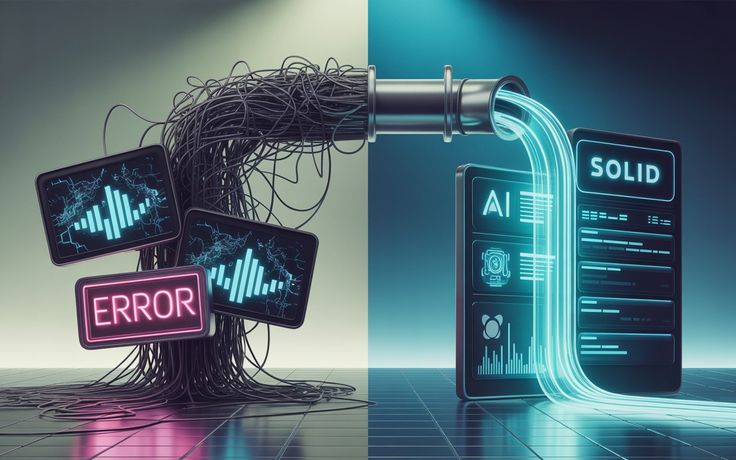


Article Contents
- •Reliability Is No Longer Optional
- •What Is Chaos Engineering?
- •Why Traditional Testing Is Not Enough
- •Why Chaos Engineering Matters More in 2026
- •Testing Distributed Systems Under Realistic Failure
- •From Infrastructure Failures to Business Failures
- •Building a Safe Chaos Experiment
- •What Should You Test?
- •Observability Is the Foundation
- •Chaos Engineering and AI Systems
- •Common Mistakes to Avoid
- •A Practical Chaos Engineering Roadmap
- •The Future of Resilience Engineering
- •Making the Call
- •Final Takeaway
Modern systems are designed to scale, but scalability does not guarantee resilience. Chaos engineering gives engineering teams a controlled way to discover how systems behave under failure—before customers discover it for them.
Reliability Is No Longer Optional
Modern applications rarely run on a single server.
A typical production platform may include:
                    Users
                      │
                      ▼
                 Load Balancer
                      │
          ┌───────────┼───────────┐
          ▼           ▼           ▼
       Service A   Service B   Service C
          │           │           │
          └───────────┼───────────┘
                      ▼
                Data Platform
                      │
          ┌───────────┼───────────┐
          ▼           ▼           ▼
        Cache       Database     Queue
Add cloud infrastructure, containers, APIs, third-party services, observability platforms, identity providers, and AI systems—and the number of possible failure paths grows quickly.
The uncomfortable reality is:
Distributed systems fail in ways that are difficult to predict from normal testing alone.
A service may work perfectly during a load test but fail when:
- A dependency becomes slow
- A network connection drops
- A database reaches capacity
- A region becomes unavailable
- A queue starts building a backlog
- A certificate expires
- A third-party API returns unexpected errors
Chaos engineering exists to explore these scenarios deliberately.
What Is Chaos Engineering?
Chaos engineering is the practice of intentionally introducing controlled failures into a system to learn how it behaves.
The objective is not to break production.
The objective is to discover weaknesses before uncontrolled failures expose them.
A simplified experiment looks like:
Hypothesis
    ↓
Introduce Controlled Failure
    ↓
Observe System
    ↓
Measure Impact
    ↓
Learn
    ↓
Improve
    ↓
Repeat
For example:
Hypothesis: If the payment service becomes temporarily unavailable, the checkout system should continue operating gracefully and recover automatically.
An experiment might then introduce a controlled dependency failure.
The team observes:
- Error rates
- Latency
- Retry behavior
- Queue growth
- User impact
- Recovery time
The result is not simply "pass" or "fail."
The result is knowledge about the system's resilience.
Why Traditional Testing Is Not Enough
Traditional testing usually asks:
"Does the system work when everything behaves as expected?"
Chaos engineering asks a different question:
"What happens when something does not behave as expected?"
Consider an application that depends on a payment API.
A normal integration test might verify:
Request
  ↓
Payment API
  ↓
Success
  ↓
Order Completed
But production might look like:
Request
  ↓
Payment API
  ↓
Timeout
  ↓
Retry
  ↓
Timeout
  ↓
Retry
  ↓
Queue Growth
  ↓
System Degradation
The application technically has retries.
But those retries may accidentally amplify the problem.
This is why resilience needs to be tested as a system behavior, not just as a collection of individual features.
Why Chaos Engineering Matters More in 2026
Modern architectures are becoming increasingly distributed.
Applications now commonly depend on:
Cloud infrastructure
Microservices
Managed databases
Event streaming
Third-party APIs
Serverless workloads
AI services
External identity providers
Every dependency introduces another potential failure mode.
At the same time, customers expect:
- Instant responses
- 24/7 availability
- Real-time transactions
- Reliable APIs
- Seamless mobile experiences
The tolerance for downtime continues to shrink.
There is another major change as well.
AI is becoming part of production systems.
An application may now depend on:
Application
    ↓
AI Gateway
    ↓
Model
    ↓
Vector Store
    ↓
External Tools / APIs
If one component becomes slow or unavailable, the failure can propagate through the entire workflow.
Chaos engineering provides a structured way to test these new dependency chains.
Testing Distributed Systems Under Realistic Failure
The most valuable chaos experiments resemble failures that could realistically occur.
For example:
Network Latency
Introduce additional delay between services.
Service A
   ↓
  +500ms
   ↓
Service B
This can reveal whether timeouts and retries are configured appropriately.
Service Failure
Temporarily make a dependency unavailable.
Service A
   ↓
Service B
   X
Unavailable
Does Service A degrade gracefully?
Resource Exhaustion
Test what happens when CPU, memory, disk, or connection pools become constrained.
Database Degradation
Introduce latency or controlled connection failures.
Queue Backlog
Increase incoming events or slow down consumers.
Observe whether the system recovers or the backlog grows indefinitely.
Dependency Failure
Simulate an unavailable third-party service.
This is particularly valuable because your team does not control external systems.
From Infrastructure Failures to Business Failures
Chaos engineering should not stop at:
"The server stayed online."
That is only one measure of resilience.
The more important question is:
"Could customers still complete important tasks?"
Consider an e-commerce platform.
A database dependency becomes slow.
Infrastructure metrics may show:
CPU: Normal
Memory: Normal
Instances: Healthy
But the customer experience might be:
Checkout
   ↓
Slow Payment
   ↓
Timeout
   ↓
Order Failure
The infrastructure is technically alive.
The business is not functioning correctly.
This is why chaos experiments should connect technical signals to business outcomes.
Useful metrics include:
Successful transactions
Checkout completion
API success rate
Customer-facing latency
Order processing time
Revenue-impacting operations
The goal is resilience at the business level, not merely infrastructure survival.
Building a Safe Chaos Experiment
Chaos engineering should be controlled.
A good experiment begins with a hypothesis.
For example:
"If the recommendation service becomes unavailable, the product page should remain usable and fall back to cached recommendations."
Then define:
Steady State
What does healthy behavior look like?
Availability > Target
Latency < Threshold
Errors < Threshold
Failure
Introduce one controlled condition.
Recommendation Service
        ↓
    Unavailable
Observation
Monitor:
- Errors
- Latency
- Logs
- Traces
- Business metrics
Abort Conditions
Define when the experiment should stop.
For example:
Customer Error Rate
       ↓
Above Safety Threshold
       ↓
STOP EXPERIMENT
Recovery
Restore normal conditions and verify the system returns to steady state.
This makes chaos engineering an engineering discipline rather than random experimentation.
What Should You Test?
Start with failure modes that have meaningful business consequences.
Good candidates include:
Dependencies
What happens when a critical API fails?
Databases
What happens when queries become slow?
Networking
What happens when services cannot communicate?
Queues
What happens when consumers fall behind?
Capacity
What happens when a workload suddenly increases?
Infrastructure
What happens when an instance or availability zone disappears?
Deployments
What happens when a new release introduces unexpected behavior?
AI Dependencies
What happens when an AI model becomes slow, unavailable, or returns unexpected responses?
Not every component needs chaos experiments immediately.
Prioritize based on:
Business criticality × Failure probability × Potential impact
Observability Is the Foundation
Chaos engineering without observability is largely guesswork.
Before running experiments, teams should be able to answer:
What changed?
What failed?
Who was affected?
How quickly did the system recover?
A strong observability stack combines:
                 System
                   │
        ┌──────────┼──────────┐
        ▼          ▼          ▼
       Logs      Metrics     Traces
        │          │          │
        └──────────┼──────────┘
                   ▼
             Observability
                   │
                   ▼
             Experiment Data
Without good observability, a team might know that an experiment caused problems without understanding why.
Chaos engineering should therefore often expose observability gaps as well.
If you cannot see how the system behaves under failure, you cannot confidently claim that it is resilient.
Chaos Engineering and AI Systems
AI introduces new resilience questions.
Imagine an AI-powered customer-support system:
Customer
   ↓
Application
   ↓
AI Service
   ↓
Knowledge Store
   ↓
Response
What happens if the model takes five seconds instead of 500 milliseconds?
What happens if the model provider becomes unavailable?
What happens if the retrieval system fails?
What happens if a tool used by the AI workflow times out?
A resilient AI application might have:
AI Request
    ↓
Primary Model
    X
    ↓
Fallback
    ↓
Cached / Deterministic Response
    ↓
Customer
Chaos experiments can test whether those fallback mechanisms actually work.
This becomes increasingly important as AI moves from experimental features into business-critical workflows.
Common Mistakes to Avoid
Treating Chaos as Random Destruction
Chaos experiments should have a clear hypothesis.
Do not break systems simply to see what happens.
Starting With Production
Production experiments can be valuable, but they should come after the team has established safe controls and understands the failure mode.
Start with lower-risk environments when appropriate.
Testing Too Many Variables
If you simultaneously shut down databases, introduce network latency, and overload the CPU, it becomes difficult to identify the root cause.
Start with one meaningful failure.
Ignoring Business Metrics
Infrastructure health does not always equal customer health.
Measure both.
Running Experiments Once
A system that passed an experiment six months ago may not pass it after architecture changes.
Resilience testing should become continuous.
Failing to Fix What You Discover
Chaos engineering is useless if experiments repeatedly expose the same problem without remediation.
The loop should be:
Experiment
   ↓
Discover Weakness
   ↓
Fix
   ↓
Verify
   ↓
Repeat
A Practical Chaos Engineering Roadmap
Step 1: Identify Critical Services
Map the systems that matter most to the business.
Step 2: Map Dependencies
Understand what happens when each dependency becomes unavailable or slow.
Step 3: Define Steady State
Establish measurable healthy behavior.
Step 4: Choose One Failure
Start with a realistic and controlled scenario.
Step 5: Establish Guardrails
Define:
Blast radius
Abort conditions
Monitoring
Rollback procedures
Step 6: Run the Experiment
Observe both technical and business behavior.
Step 7: Document the Learning
Record:
- What happened
- Why it happened
- What worked
- What failed
- What needs improvement
Step 8: Fix and Repeat
Turn lessons into engineering improvements.
Over time, chaos engineering becomes part of normal reliability work.
The Future of Resilience Engineering
Chaos engineering is evolving from occasional failure experiments into a broader approach to resilience.
Modern systems increasingly need to account for:
Cloud failures
Distributed dependencies
Regional outages
Capacity spikes
Third-party failures
AI service degradation
Security incidents
Configuration mistakes
The future is not simply:
"Can our server survive?"
It is:
"Can the business continue operating when parts of the technology ecosystem fail?"
That leads toward a more mature resilience model:
Design
  ↓
Observe
  ↓
Experiment
  ↓
Discover
  ↓
Improve
  ↓
Automate
  ↺
Resilience becomes a continuous engineering capability rather than a one-time certification.
Making the Call
Chaos engineering is particularly valuable when systems have:
Many dependencies
High availability requirements
Distributed architectures
Complex failure modes
Significant customer impact from outages
AI or third-party services
But the goal should not be to maximize the number of experiments.
Start with the failures that matter most.
Ask:
What would hurt the business most if it failed tomorrow?
Then test that scenario safely.
A useful principle is:
Do not test chaos for the sake of chaos. Test the assumptions your reliability depends on.
Final Takeaway
Modern systems are built to scale, but scale creates complexity.
More services mean more dependencies.
More dependencies mean more possible failure paths.
More automation means more interactions between components.
And AI is adding another layer of dynamic dependencies to production systems.
Chaos engineering provides a practical answer:
Instead of waiting for failures to teach us how the system behaves, we deliberately create controlled failures and learn from them first.
The process is simple:
Hypothesize → Experiment → Observe → Learn → Improve → Repeat
The objective is not to prove that a system can never fail.
That is unrealistic.
The objective is to make failures:
Expected
Contained
Observable
Recoverable
and ultimately less damaging.
In 2026, resilience is not about building systems that never break. It is about building systems—and teams—that know what to do when something inevitably does.
That is why chaos engineering matters.
Frequently Asked Questions
Need a product built?
We build custom software, mobile apps, and web platforms for startups and enterprises.



Their team became an extension of ours — within months they'd rebuilt our entire product experience from the ground up.