
Micro-Frontends vs. Monolithic Apps: A Decision Guide for Engineering Leaders
A practical guide to choosing between a unified frontend and a micro-frontend architecture—covering team autonomy, deployment speed, performance, governance, scalability, and the organizational trade-offs that actually matter.


Article Contents
- •Why Frontend Architecture Is Becoming a Leadership Decision
- •What Is a Monolithic Frontend?
- •What Are Micro-Frontends?
- •The Real Difference: Architecture vs. Organization
- •When a Monolith Is the Better Choice
- •When Micro-Frontends Make Sense
- •Team Ownership and Autonomy
- •Deployment and Release Strategy
- •Performance and User Experience
- •Shared Design Systems and Dependencies
- •Testing and Observability
- •Security and Governance
- •Common Micro-Frontend Mistakes
- •A Practical Decision Framework
- •Migration Without a Rewrite
- •The Future of Frontend Architecture
- •Making the Call
- •Final Takeaway
A practical guide to choosing between a unified frontend and a micro-frontend architecture—covering team autonomy, deployment speed, performance, governance, scalability, and the organizational trade-offs that actually matter.
Why Frontend Architecture Is Becoming a Leadership Decision
Frontend applications have become much larger than they were a decade ago.
A modern enterprise application may contain:
Customer accounts
Commerce
Billing
Analytics
Search
Administration
Support
Content
Personalization
Over time, a single frontend can become difficult to manage.
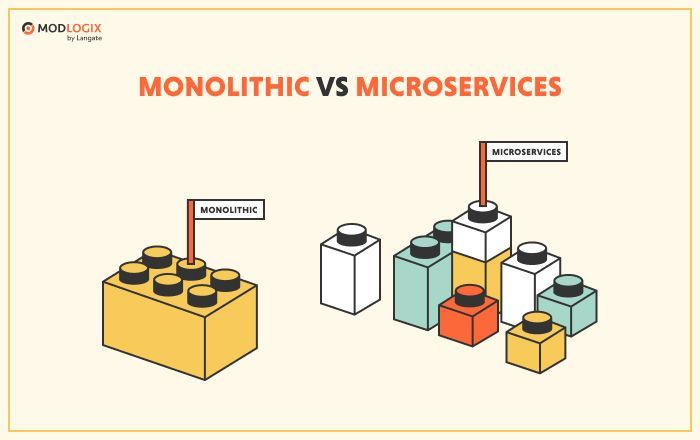
A typical monolithic frontend looks like:
                    Frontend
                       │
        ┌──────────────┼──────────────┐
        ▼              ▼              ▼
     Account        Commerce       Analytics
        │              │              │
        └──────────────┼──────────────┘
                       ▼
                  Shared Build
                       │
                       ▼
                    Release
This architecture can be perfectly effective.
But as the application and organization grow, teams may start asking:
Why does one team's small change require the entire frontend to be built and released?
Why do five teams need to coordinate every major frontend change?
Why is a shared codebase becoming a bottleneck?
These questions often lead organizations toward micro-frontends.
But micro-frontends are not automatically an upgrade.
They solve certain organizational and architectural problems while introducing others.
What Is a Monolithic Frontend?
A monolithic frontend generally has one application, one primary build pipeline, and a coordinated deployment process.
For example:
                    Web App
                       │
       ┌───────────────┼───────────────┐
       ▼               ▼               ▼
     Users          Orders          Reports
       │               │               │
       └───────────────┼───────────────┘
                       ▼
                 Single Build
                       ↓
                 Single Release
This model provides several advantages.
Simplicity
Developers have one application to understand.
Consistency
Shared components and patterns are easier to enforce.
Performance
There is less runtime composition overhead.
Testing
End-to-end workflows can be easier to reason about.
Deployment
There is one primary release pipeline.
For many products, these benefits are significant enough that a monolith remains the right choice.
What Are Micro-Frontends?
Micro-frontends apply some of the ideas behind microservices to frontend development.
Instead of one large application, different business domains can be owned and developed more independently.
For example:
                    Web Platform
                        │
        ┌───────────────┼───────────────┐
        ▼               ▼               ▼
     Account         Commerce        Analytics
        │               │               │
      Team A          Team B          Team C
        │               │               │
     Deploy           Deploy          Deploy
    Independently    Independently   Independently
Each team can potentially own:
UI
Business logic
Testing
Deployment
Observability
Operational responsibility
The important idea is not simply splitting the frontend into smaller bundles.
It is creating clear ownership boundaries around business capabilities.
The Real Difference: Architecture vs. Organization
This is where many micro-frontend discussions go wrong.
The decision is not just:
Monolith vs. Micro-frontends
It is also:
How should teams own and deliver the product?
Imagine an organization with:
10 Teams
1 Frontend
1 Repository
1 Release
The architecture may become a coordination bottleneck.
Micro-frontends can instead enable:
10 Teams
10 Domains
Multiple Deployment Units
Independent Ownership
But if you have:
3 Developers
1 Product
5 Features
introducing micro-frontends may create more complexity than value.
The architecture should match the organization's actual structure.
When a Monolith Is the Better Choice
A monolithic frontend is often the better option when:
The Product Is Small or Medium-Sized
A single codebase is easier to navigate and maintain.
Teams Are Small
There may not be enough organizational complexity to justify independent applications.
Features Are Highly Connected
If multiple areas constantly depend on each other, splitting them may create unnecessary integration complexity.
Consistent UX Is Critical
A shared application makes it easier to enforce common interaction patterns.
Performance Is Extremely Sensitive
A simpler runtime architecture can reduce unnecessary JavaScript and integration overhead.
The Organization Is Still Discovering the Product
Early-stage products change rapidly.
Premature architectural boundaries can become expensive when the domain is still evolving.
In these situations:
A well-structured monolith is often the fastest architecture to build and evolve.
When Micro-Frontends Make Sense
Micro-frontends become more compelling when several conditions appear together.
Multiple Independent Teams
Different teams need to ship different business areas without blocking each other.
Clear Business Boundaries
For example:
Commerce
   │
Orders
   │
Payments
   │
Customer
These domains have meaningful ownership boundaries.
Independent Release Requirements
If one team needs to deploy several times a week while another releases monthly, independent deployment can become valuable.
Large Existing Frontend
A large legacy application may be difficult to modernize in one step.
Micro-frontends can provide a path toward incremental modernization.
Organizational Autonomy Matters
Teams need the ability to own their domain from development through production.
This is where micro-frontends can provide their strongest value.
Team Ownership and Autonomy
One of the biggest arguments for micro-frontends is team autonomy.
A team can own:
Domain
  ↓
Code
  ↓
Tests
  ↓
Deployment
  ↓
Monitoring
This can reduce coordination overhead.
For example:
The checkout team changes checkout.
The account team changes account management.
The analytics team changes dashboards.
Teams can work independently as long as they respect agreed platform contracts.
But autonomy only works when boundaries are real.
If every team constantly modifies shared application infrastructure, you have recreated the monolith in a more complicated form.
Deployment and Release Strategy
A traditional frontend usually follows:
Change
 ↓
Build Entire App
 ↓
Test
 ↓
Deploy
A micro-frontend model can become:
Commerce Change
      ↓
Commerce Build
      ↓
Commerce Deploy

Account Change
      ↓
Account Build
      ↓
Account Deploy
This can reduce release coupling.
But independent deployment introduces new responsibilities.
You need clear contracts around:
Navigation
Authentication
Events
Shared dependencies
API compatibility
Versioning
Rollback
The more independently deployable pieces you have, the more important platform engineering becomes.
Performance and User Experience
This is one area where micro-frontends can introduce real costs.
A poorly designed implementation may cause:
Browser
  ↓
Load Shell
  ↓
Load App A
  ↓
Load App B
  ↓
Load App C
  ↓
Initialize Dependencies
  ↓
Render
Potential problems include:
Duplicate dependencies
Larger JavaScript payloads
More network requests
Longer startup time
Runtime integration overhead
A monolithic application can often share dependencies more efficiently.
Micro-frontends therefore require deliberate performance engineering.
Use techniques such as:
Code splitting
Lazy loading
Dependency sharing
Caching
Preloading where justified
Performance budgets
The user should never experience the architecture as a collection of separate applications.
Shared Design Systems and Dependencies
One of the hardest questions is:
What should be shared?
A company may want:
One design system
One authentication approach
One analytics solution
One navigation model
But excessive sharing creates coupling.
If every micro-frontend depends on the same internal package, changing that package may still require coordinated releases.
A useful approach is to distinguish between:
Platform Standards
Things that should be consistent.
Examples:
Accessibility
Brand guidelines
Security requirements
Telemetry conventions
Domain Implementation
Things teams should own independently.
Examples:
Checkout workflows
Account experiences
Reporting logic
The goal is:
Standardize the platform. Decentralize the product domains.
Testing and Observability
Testing becomes more complicated when applications become distributed.
You need to test:
Micro-Frontend A
      ↓
Micro-Frontend B
      ↓
Shared Shell
      ↓
Backend APIs
Individual teams can own unit and component tests.
But cross-domain workflows still require integration and end-to-end testing.
Observability becomes equally important.
Track:
Frontend errors
Load performance
Navigation timing
API latency
Failed deployments
User journeys
A request or user session may cross multiple frontend modules and backend services.
Without consistent telemetry, debugging becomes difficult.
Security and Governance
Micro-frontends increase the number of independently delivered application components.
That creates additional security considerations.
Each team needs clear standards around:
Dependency security
Content Security Policy
Authentication
Authorization
Data handling
Third-party scripts
Secrets
Security should not depend on every team independently interpreting best practices.
A central platform team can provide secure defaults while product teams own their domain functionality.
This creates a useful model:
Platform Team
     ↓
Secure Defaults
     ↓
Domain Teams
     ↓
Independent Delivery
Autonomy works best when the platform makes the secure path the easy path.
Common Micro-Frontend Mistakes
Splitting by Technical Components
Creating:
Header Micro-Frontend
Button Micro-Frontend
Search Box Micro-Frontend
usually creates unnecessary complexity.
Split around business capabilities, not arbitrary UI components.
Creating Too Many Micro-Frontends
More deployment units do not automatically mean more autonomy.
Every additional boundary introduces integration overhead.
Sharing Too Much
If every team depends on the same internal modules, independent deployment becomes difficult.
Ignoring UX Consistency
Users should experience one product—not five independently designed applications.
Underestimating Platform Engineering
Micro-frontends need strong foundations for:
Routing
Authentication
Deployment
Observability
Dependency management
Design systems
Migrating Everything at Once
A complete frontend rewrite is rarely necessary.
Incremental migration is usually safer.
A Practical Decision Framework
Before choosing an architecture, score your situation across several dimensions.
| Question | Monolith | Micro-Frontends |
|---|---|---|
| Small engineering team | Strong fit | Usually unnecessary |
| Large independent teams | Can become difficult | Strong fit |
| Highly shared workflows | Strong fit | More complex |
| Independent releases | Limited | Strong |
| Simple deployment | Excellent | More complex |
| Strong domain boundaries | Optional | Important |
| Maximum runtime simplicity | Strong | Requires care |
| Incremental legacy migration | Possible | Often useful |
| Centralized UX | Easier | Requires governance |
| Independent ownership | Limited | Strong |
The key is not to maximize the number of micro-frontends.
It is to minimize organizational friction while keeping the technical system manageable.
Migration Without a Rewrite
If your existing frontend is already large, do not assume you need to rebuild everything.
A gradual approach can look like:
Existing Monolith
      │
      ├── Legacy Area
      ├── Legacy Area
      │
      └── New Micro-Frontend
               │
               ▼
         Independent Team
Then gradually:
Old Monolith
      ↓
Hybrid Architecture
      ↓
More Independent Domains
      ↓
Modern Frontend Platform
This allows teams to learn what works before committing to a broader transformation.
Start with a domain that has:
Clear ownership
Limited dependencies
Meaningful release pressure
That makes it a useful proving ground.
The Future of Frontend Architecture
The future is unlikely to be purely monolithic or purely micro-frontend.
Many organizations will use hybrid architectures.
For example:
                   Application
                       │
              ┌────────┴────────┐
              ▼                 ▼
        Shared Foundation    Domains
              │          ┌──────┼──────┐
              │          ▼      ▼      ▼
              │       Account Commerce Analytics
              │
              ▼
        Platform Services
Some areas may remain tightly integrated.
Others may become independently deployable.
The architecture can evolve according to business boundaries rather than following a single ideology.
AI-assisted development may also make large frontend codebases easier to navigate and refactor, potentially reducing some of the pressure that historically pushed teams toward extreme decomposition.
That makes the fundamental question even more important:
Is architectural distribution solving a real organizational problem, or are we distributing the system because the technology makes it possible?
Making the Call
Engineering leaders should ask:
How many teams need to work independently on the frontend?

Do we have clear business boundaries?

How often do teams block each other's releases?

Is our current monolith actually causing measurable problems?

Can our organization support independent deployments?

Do we have the platform engineering capability to manage distributed frontend architecture?

How will we maintain a consistent user experience?

What performance budget will every micro-frontend need to meet?

Which parts of the application should remain centralized?
The most important question is:
What problem are we trying to solve?
If the answer is simply "our frontend is large," a modular monolith may be enough.
If the answer is "multiple autonomous teams cannot safely and independently deliver their domains," micro-frontends become much more compelling.
Final Takeaway
Micro-frontends are not the next version of frontend development.
They are an architectural strategy for a specific class of organizational and technical problems.
A monolithic frontend offers:
Simplicity
Consistency
Lower operational overhead
Straightforward testing
A micro-frontend architecture can offer:
Team autonomy
Independent deployment
Domain ownership
Incremental modernization
But it also introduces:
Runtime complexity
Dependency management
Integration challenges
Performance considerations
Governance requirements
The strongest strategy is often somewhere between the extremes.
Start with the simplest architecture that allows your teams to move quickly. Introduce micro-frontends when organizational boundaries and independent delivery create enough value to justify the additional complexity.
Do not split an application because micro-frontends are fashionable.
Do not keep a monolith because simplicity sounds safer.
Instead, look at your teams, your product boundaries, your release process, and your actual engineering bottlenecks.
Architecture should follow the way your organization builds software—not the other way around.
Frequently Asked Questions
Need a product built?
We build custom software, mobile apps, and web platforms for startups and enterprises.



Their team became an extension of ours — within months they'd rebuilt our entire product experience from the ground up.