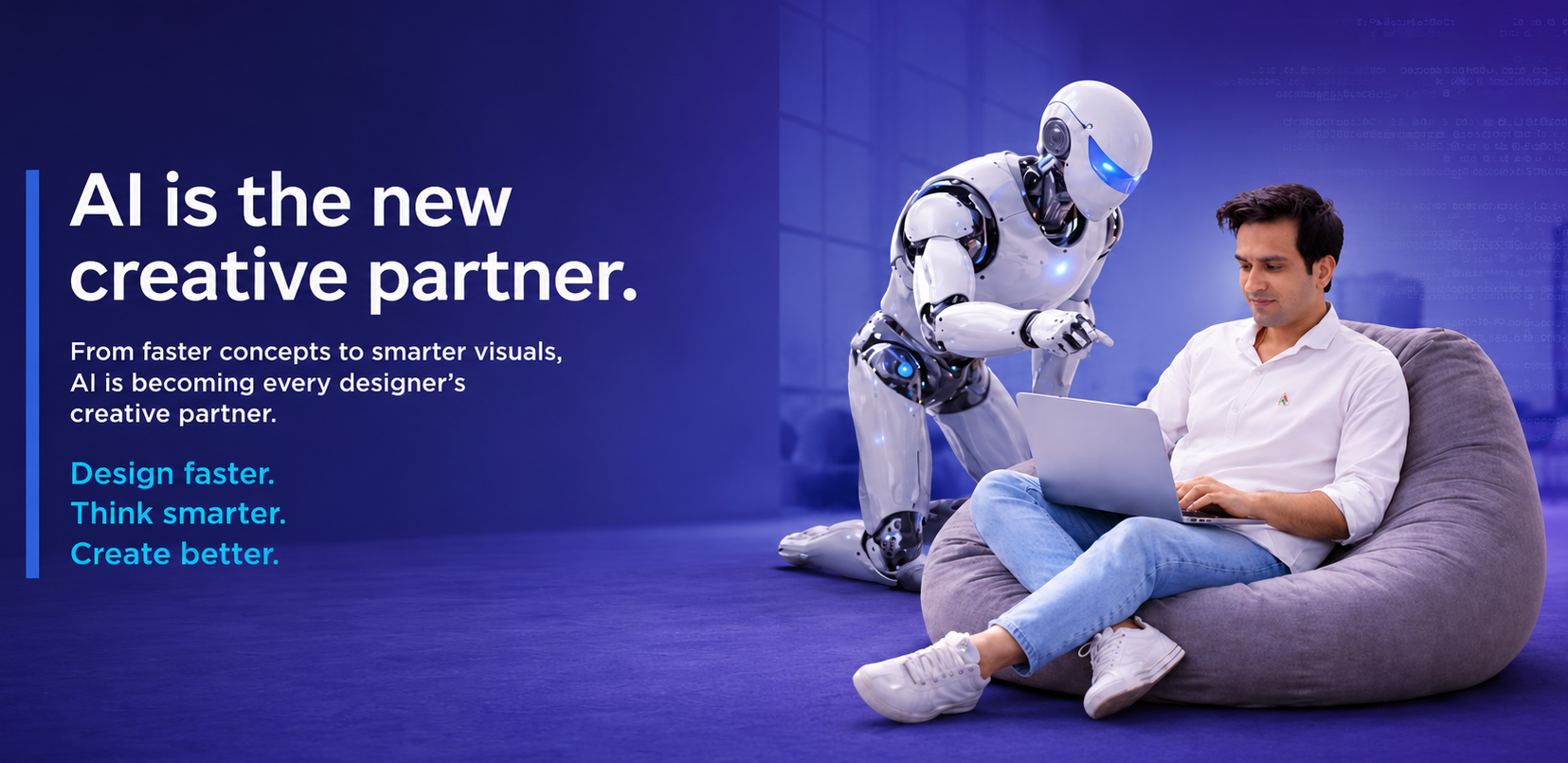
Human–AI Collaboration in the Workplace: Building the Future of Work
How organizations can move beyond the “AI replacing people” debate and build practical human–AI collaboration models that improve productivity, decision-making, creativity, and employee experience—while keeping people accountable for the outcomes that matter.


Article Contents
- •The Workplace Is Entering a New AI Era
- •What Human–AI Collaboration Actually Means
- •AI as a Copilot, Not a Replacement
- •Where AI Creates the Most Value
- •Redesigning Work Around Human Strengths
- •Human Judgment Still Matters
- •Building AI Into Everyday Workflows
- •The New Role of Managers and Leaders
- •Trust, Security, and Responsible AI
- •Measuring the Impact of AI Collaboration
- •Common Mistakes Organizations Make
- •A Practical Adoption Strategy
- •The Future of Human–AI Teams
- •Making the Call
- •Final Takeaway
How organizations can move beyond the “AI replacing people” debate and build practical human–AI collaboration models that improve productivity, decision-making, creativity, and employee experience—while keeping people accountable for the outcomes that matter.
The Workplace Is Entering a New AI Era
Artificial intelligence is changing the workplace—but the biggest shift is not simply automation.
It is the emergence of a new working relationship between people and intelligent software.
For years, workplace technology primarily followed this model:
Employee
   ↓
Software
   ↓
Task
   ↓
Result
AI introduces something different:
Employee
     ↕
    AI
     ↕
Tools / Data / Systems
     ↓
Outcome
Instead of simply executing predefined instructions, AI systems can increasingly:
Generate ideas
Summarize information
Analyze data
Write and transform content
Assist with software development
Identify patterns
Answer questions
Automate repetitive workflows
This creates a new strategic question for organizations:
How do we design work so humans and AI each contribute what they do best?
That is a much more useful question than simply asking whether AI will replace jobs.
What Human–AI Collaboration Actually Means
Human–AI collaboration is not about handing an employee a chatbot and calling the organization "AI-powered."
It means deliberately designing workflows where:
Humans provide context, judgment, creativity, accountability, and domain expertise.
AI provides speed, scale, pattern recognition, automation, and assistance with information-heavy tasks.
A simplified model looks like:
                Business Goal
                     │
            ┌────────┴────────┐
            ▼                 ▼
         Human               AI
            │                 │
      Judgment / Context   Analysis / Speed
            │                 │
            └────────┬────────┘
                     ▼
                  Decision
                     │
                     ▼
                  Outcome
The strongest implementations do not remove humans from the process.
They make humans more capable.
AI as a Copilot, Not a Replacement
The word "copilot" has become common because it captures an important idea.
AI can assist with work without necessarily owning the final outcome.
Consider software development.
Instead of:
Developer
   ↓
Writes Everything
   ↓
Tests
   ↓
Deploys
an AI-assisted workflow might look like:
Developer
   ↓
Defines Requirement
   ↓
AI Generates / Suggests
   ↓
Developer Reviews
   ↓
Tests
   ↓
Deploys
The developer becomes less focused on repetitive implementation and more focused on:
Architecture
Requirements
Trade-offs
Code quality
Security
Testing
The same pattern applies beyond engineering.
A marketer can ask AI to generate campaign variations.
A financial analyst can use AI to explore a dataset.
A customer-support agent can receive suggested responses.
A manager can turn meeting notes into action items.
The employee remains responsible for understanding the situation and deciding what should actually happen.
Where AI Creates the Most Value
AI is particularly useful when work involves large amounts of information or repetitive cognitive effort.
Research and Knowledge Work
AI can help:
Summarize documents
Compare information
Extract key points
Generate research questions
Organize knowledge
Communication
AI can assist with:
Drafting emails
Writing reports
Preparing presentations
Adapting tone
Summarizing meetings
Software Engineering
AI can support:
Code generation
Refactoring
Testing
Documentation
Debugging
Code explanation
Data and Analytics
AI can help employees:
Explore datasets
Generate SQL
Explain trends
Create analytical summaries
Identify anomalies
Customer Operations
AI can support:
Ticket classification
Response suggestions
Knowledge retrieval
Conversation summaries
Workflow automation
The important point is that AI does not have to automate the entire job to create significant value.
Automating 20 minutes of repetitive work across thousands of employees can produce enormous organizational leverage.
Redesigning Work Around Human Strengths
The most successful organizations will not simply automate individual tasks.
They will redesign workflows.
Consider a traditional process:
Collect Information
       ↓
Read Everything
       ↓
Analyze
       ↓
Write Report
       ↓
Make Decision
AI can transform it into:
Collect Information
       ↓
AI Organizes / Summarizes
       ↓
Human Reviews
       ↓
AI Explores Alternatives
       ↓
Human Decides
       ↓
AI Documents / Executes
The employee spends less time moving information around and more time interpreting it.
This distinction matters.
AI creates the most value when it removes friction from human decision-making rather than simply removing human participation.
Human Judgment Still Matters
AI systems can be remarkably capable.
They can also be confidently wrong.
An AI-generated answer may:
Contain incorrect information
Miss important context
Reflect biased data
Misinterpret a requirement
Produce insecure code
Recommend an inappropriate action
This makes human oversight essential in high-impact workflows.
A useful model is:
AI Suggestion
     ↓
Human Verification
     ↓
Context / Judgment
     ↓
Decision
     ↓
Accountability
The higher the potential impact, the stronger the review process should be.
For example, AI assistance in drafting an internal email is very different from AI assistance in:
Healthcare decisions
Financial approvals
Employment decisions
Legal workflows
Security operations
Organizations need risk-based controls rather than assuming every AI use case requires identical oversight.
Building AI Into Everyday Workflows
The biggest productivity gains often come when AI becomes part of existing systems rather than another application employees must remember to open.
For example:
CRM
 │
 ├── Customer History
 ├── Sales Data
 └── AI Assistant
          ↓
     Next-Best Action
Or:
Project Management
       │
       ▼
      AI
       │
 ┌─────┼─────┐
 ▼     ▼     ▼
Risks  Tasks  Summary
This makes AI contextual.
Instead of asking an employee to copy information into an AI tool, the system can provide assistance within the workflow where the work already happens.
That reduces friction and can improve adoption.
The New Role of Managers and Leaders
AI changes management as much as it changes individual jobs.
Managers increasingly need to understand:
Which tasks should be automated?
Which tasks should be augmented?
Which decisions require human ownership?
What skills will employees need next?
How should AI performance be measured?
A manager's role can evolve from:
"Are employees completing every step manually?"
toward:
"Are we designing the workflow so people spend their time on the highest-value decisions?"
This means organizations should rethink productivity metrics.
If AI allows an employee to complete a task in 20 minutes instead of two hours, measuring productivity based solely on hours spent can produce the wrong incentives.
Trust, Security, and Responsible AI
Human–AI collaboration cannot succeed without trust.
Employees need to know:
What AI is allowed to access
How their data is used
When AI is making suggestions
When humans must review outputs
What information should never be entered into an AI system
Organizations should establish clear policies around:
Sensitive information
Customer data
Intellectual property
Access controls
Model usage
Auditability
Human review
A practical security model looks like:
User
  ↓
Identity
  ↓
Access Controls
  ↓
AI Application
  ↓
Approved Data
  ↓
Model
  ↓
Auditable Output
Security should be designed into AI workflows rather than added after employees have already adopted them.
Measuring the Impact of AI Collaboration
"Everyone uses AI" is not a useful success metric.
Organizations should measure outcomes.
For example:
Productivity
Time saved per workflow
Tasks completed
Cycle time
Quality
Error rates
Review outcomes
Customer satisfaction
Business Impact
Revenue
Cost reduction
Conversion
Retention
Employee Experience
AI adoption
Employee satisfaction
Time spent on repetitive work
A useful framework is:
AI Adoption
     ↓
Workflow Change
     ↓
Productivity / Quality
     ↓
Business Outcome
The key is connecting AI usage to measurable business results.
Common Mistakes Organizations Make
Treating AI as a Standalone Tool
Giving employees access to AI without redesigning workflows often produces limited value.
Automating Before Understanding the Process
If the existing process is inefficient, automating it can simply make the inefficiency faster.
Assuming AI Is Always Correct
AI output should be validated according to the risk of the task.
Measuring Usage Instead of Outcomes
Thousands of prompts do not necessarily translate into business value.
Ignoring Employee Training
Employees need to understand both the capabilities and limitations of AI.
Creating Overly Restrictive Policies
If employees cannot use AI for low-risk tasks, they may resort to unmanaged tools instead.
Removing Human Accountability
AI can generate recommendations.
Organizations still need clear ownership of decisions and outcomes.
Building Too Many AI Experiments
A company can quickly accumulate dozens of disconnected AI pilots.
The better approach is to identify a small number of workflows where AI can produce measurable value and scale those successfully.
A Practical Adoption Strategy
Step 1: Map the Work
Identify repetitive and information-heavy tasks.
Look for:
Manual data processing
Repeated communication
Document analysis
Routine reporting
Knowledge retrieval
Step 2: Classify the Risk
Separate use cases into:
Low Risk
   ↓
AI Can Act With Light Review

Medium Risk
   ↓
AI Assists + Human Review

High Risk
   ↓
AI Supports, Human Decides
This creates a practical governance model.
Step 3: Choose High-Value Workflows
Do not start with "Where can we add AI?"
Start with:
Where does employee time disappear into repetitive work?
Step 4: Integrate With Existing Tools
Connect AI to the systems employees already use where appropriate.
Step 5: Establish Guardrails
Define:
Data permissions
Human review
Security requirements
Approved tools
Audit requirements
Step 6: Train Employees
Training should cover:
Prompting
Verification
Data handling
AI limitations
Workflow design
Step 7: Measure Results
Compare the workflow before and after AI adoption.
For example:
Before AI
2 hours / task
     ↓
After AI
45 minutes / task
     ↓
Savings
75 minutes / task
Then determine whether the saved time actually creates business value.
Step 8: Scale What Works
Turn successful experiments into standardized workflows.
Do not scale an AI system simply because it performed well in a demo.
The Future of Human–AI Teams
The next stage of workplace AI will likely move beyond individual assistants.
Organizations will increasingly build systems where multiple AI capabilities participate in workflows alongside people.
A future architecture could look like:
                  Employee
                     │
                     ▼
               AI Orchestrator
                     │
        ┌────────────┼────────────┐
        ▼            ▼            ▼
     Research      Analysis     Execution
        │            │            │
        └────────────┼────────────┘
                     ▼
               Human Decision
                     │
                     ▼
                  Outcome
AI systems may increasingly:
Gather information
Analyze options
Prepare recommendations
Execute approved actions
Monitor outcomes
The human role becomes less about manually performing every step and more about setting goals, evaluating trade-offs, and taking responsibility for decisions.
That does not make people less important.
It makes judgment, context, creativity, leadership, and accountability more valuable.
Making the Call
Leaders building a human–AI workplace should ask:
Which workflows genuinely benefit from AI?

What should AI automate, and what should it only assist with?

Where must humans remain directly responsible?

What data can AI access?

How will employees verify AI outputs?

How will success be measured?

What skills will employees need as workflows change?

How will AI become part of existing systems rather than another disconnected tool?
Most importantly:
Are we using AI to reduce human value—or to increase human capability?
That distinction will shape whether AI becomes a source of organizational leverage or simply another layer of technology complexity.
Final Takeaway
The future workplace is unlikely to be:
Humans vs. AI
It is more likely to be:
Humans + AI
      ↓
Better Workflows
      ↓
Better Decisions
      ↓
Better Outcomes
AI can process information at enormous scale.
Humans bring:
Context
Experience
Empathy
Creativity
Judgment
Accountability
The strongest organizations will combine these strengths deliberately.
Don't ask which jobs AI can replace. Ask which parts of each job AI can make dramatically better.
Start with real workflows.
Automate repetitive work.
Keep humans accountable for important decisions.
Build security and governance into the process.
Measure outcomes rather than AI usage.
And give employees the skills to work effectively with intelligent systems.
The competitive advantage will not simply belong to organizations that have the most AI.
It will belong to organizations that have learned how to organize humans and AI into better teams.
The future of work is not human or artificial intelligence. It is the quality of the collaboration between them.
Frequently Asked Questions
Need a product built?
We build custom software, mobile apps, and web platforms for startups and enterprises.



Their team became an extension of ours — within months they'd rebuilt our entire product experience from the ground up.